
BROADCAST 101 · LESSON SERIES
Your next remote doesn’t need a satellite truck, a fiber pull, or the venue’s $35,000 circuit.
It needs every connection the location already has — bonded into one.
Five myths about broadcast connectivity
The five things everyone believes — and what the field data actually says. Each one is a two-minute lesson.
Myth 1
“You still need the truck”
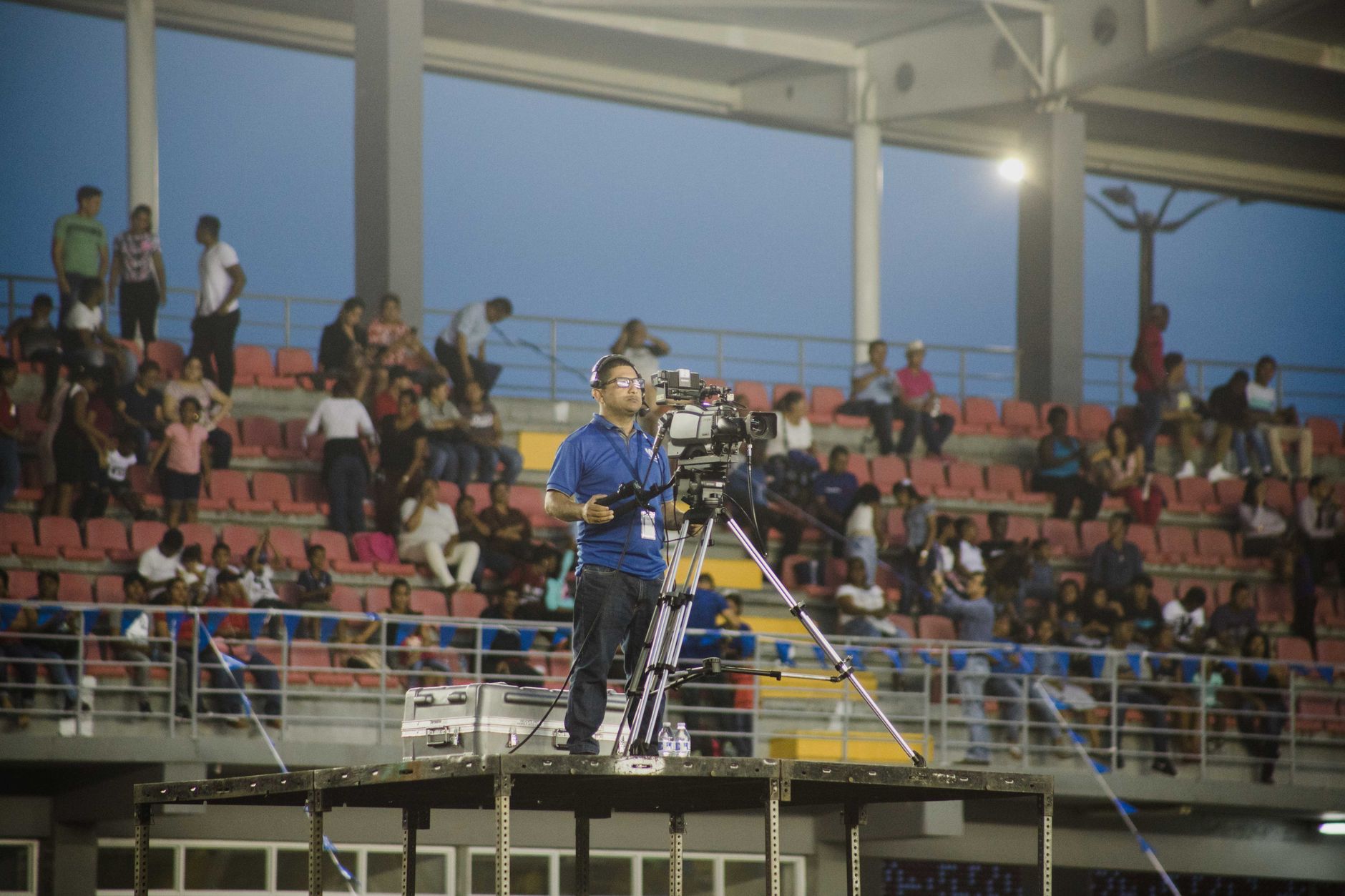
The satellite truck bought you one guaranteed path. Bonded multi-carrier 5G plus Starlink gives you several — for a fraction of the cost, in a case you can check as luggage. Regional networks are covering 60-game seasons without one.
Myth 2
“Cellular can’t carry live air”
Raw cellular can’t. Bonded cellular with WAN smoothing can — the tunnel duplicates critical packets across carriers so one bad link never becomes a glitch on program. Golf majors, F1 and SailGP already trust it.
Myth 3
“Failover is good enough for live”
A failover event is a dropped frame by definition: something breaks, then something switches. Bonding uses every link at once — when a carrier dies mid-broadcast, the viewer sees nothing.
Myth 4
“More bandwidth fixes glitchy streams”
Streams die from jitter and packet loss, not thin pipes. A 100 Mbps link with loss looks worse on air than a clean 20 Mbps one. Smoothing and FEC attack the real problem.
Myth 5
“Starlink alone is broadcast-grade”
LEO is brilliant and it dips — handoffs, weather, obstructions. Bond it with cellular and those dips disappear into the tunnel. We’ve bonded Starlink into 1.46 Gbps of usable, stable uplink.
Five fixes: how the New Enterprise does it
Fix 1
A REMI kit in a case
Bonded multi-carrier 5G + Starlink field kit that deploys in minutes and flies as luggage.
Read more →Fix 2
WAN smoothing on the program feed
Packet duplication across links so program never glitches — even when a carrier does.
Read more →Fix 3
Sub-tunnels: program rides first class
The program feed gets smoothing; file transfers ride coach. One kit, two behaviors.
Read more →Fix 4
Layer-2 VLAN over the bond
Extend the studio network to the venue — intercom, control, tally — over one encrypted tunnel.
Read more →Fix 5
Fleet control from anywhere
Every kit visible and configurable in InControl 2 before the truckless truck rolls.
Read more →Proof from the field
“Live air, bonded — golf majors, F1 and SailGP have gone out over these kits with zero program glitches.”
From the field · West Networks broadcast deployments
Proof
Regional sports network retires the truck
60 games a season on bonded kits — the SNG truck stayed home.
Read the case study →Proof
Winning the festival circuit
A live production company runs the summer circuit on a bonded site case.
Read the case study →Proof
Golf majors · F1 · SailGP
The flagship: WAN-smoothed REMI at world-class events, 1.46 Gbps bonded Starlink.
Read the case study →Packages
Three honest tiers — sized by how bad your worst day is allowed to be. Every package is bonded, encrypted, and managed from anywhere.
Package 1
Field Reporter
BR2 Pro 5G kit — dual 5G bonded, ready for hits and interviews.
See the kit →Package 2
REMI Production
HD4 MBX quad-5G + Starlink — multi-camera remote production, mixed carriers.
See the kit →Package 3
Broadcast Compound
Balance 580X core + BR1 Pro 5G array + MAX antennas — 6-8 WAN high-capacity uplink for the whole compound.
See the kit →Not sure? Use the kit selector →
Broadband + 5G + Starlink
Unbreakable connectivity
The hardware bonds the links; west5g supplies them — multi-carrier 5G data plans, pooled data across your fleet, and Starlink pairing, engineered for five-nines uptime by the same team that builds your network.